Difficult Emotions
Learn how to rebuild emotional intimacy after a fight with clear, step-by-step advice. Calm the conflict, repair the connection, and feel close again.

Learn how to rebuild emotional intimacy after a fight with clear, step-by-step advice. Calm the conflict, repair the connection, and feel close again.
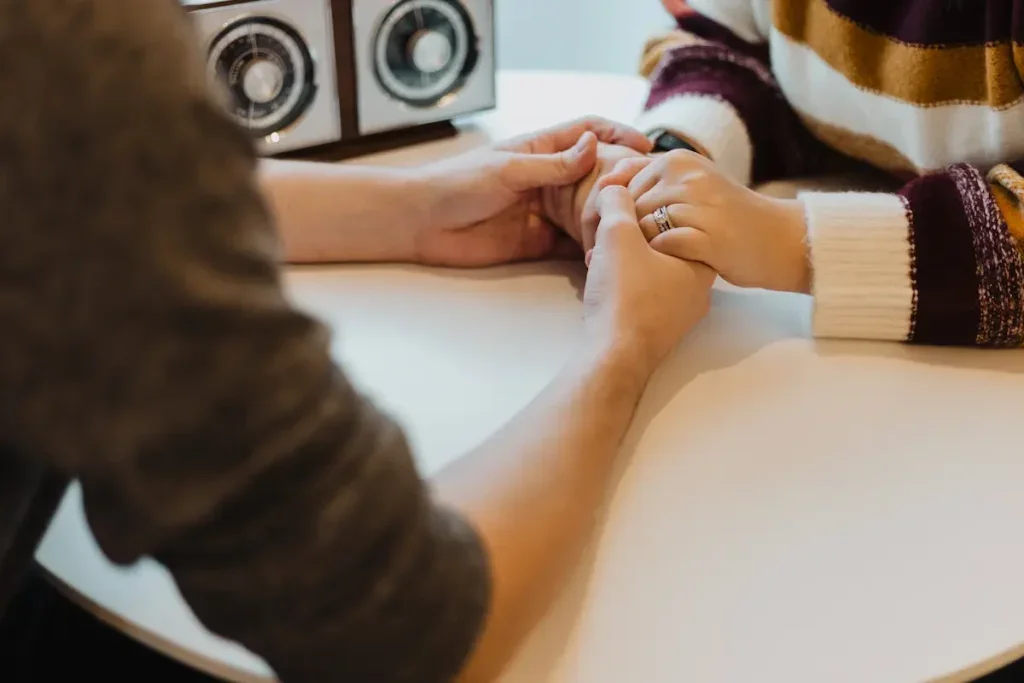
Rebuilding emotional intimacy after a fight does not happen by talking about the fight again. It happens when both people feel safe enough to stop defending themselves and start turning toward each other. That process begins with calming your body, then offering a clear repair, then listening without planning your rebuttal. The steps below explain exactly how to do that, in order, without relying on vague advice like "just communicate better."

A fight ends. The yelling stops. The door closes. And then something worse settles in: the cold, strained distance where two people move around each other like strangers in a small apartment.
You are not still angry, exactly. You are unsure. You do not know if your partner is still upset, or if they are waiting for you to speak first, or if speaking first will make things worse. So you wait. And the waiting hardens into something heavier.
This is the moment where emotional intimacy is either rebuilt or quietly eroded. When nothing is repaired, resentment builds . The fight becomes a layer of sediment. Another fight adds another layer. Eventually, the weight of all those unrepaired moments makes closeness feel impossible.
The choice after a fight is not between "winning" and "losing." It is between turning toward your partner or turning away. Turning toward them is harder in the moment. It is also the only thing that actually works.
Read Also: Why Do I Feel Emotionally Disconnected From My Partner
You cannot rebuild intimacy while your nervous system is still in alarm mode. This is not a metaphor. When you are flooded—heart racing, jaw tight, thoughts scattered—the part of your brain that handles connection and empathy is not fully online. Trying to have a meaningful conversation in that state usually produces another fight.
Take a real break. Not a cold shoulder. Not a dramatic exit. A break with a plan.
The break should last at least twenty minutes. That is roughly how long it takes for the stress hormones from a conflict to begin clearing your system . During that time, do one thing that physically settles you. Walk around the block. Breathe slowly with a longer exhale than inhale. Splash cold water on your face. Do not scroll your phone. Do not rehearse your argument in your head. Rehearsing keeps the fight alive.
The critical piece is this: tell your partner you are coming back. "I need twenty minutes to calm down. I am not leaving this conversation. I will come back at seven." A pause without a return time feels like abandonment. A pause with a return time feels like care.
Someone has to go first. Your ego will tell you it should be your partner, because they were more wrong, or they started it, or they were louder. Your ego is not trying to help your relationship. It is trying to protect you from feeling vulnerable.
Going first is not weakness. It is the most direct signal you can send that the relationship matters more than the point you were trying to make .
When you approach, approach softly. Tone and body language carry more weight than the words themselves. "Hey, let's talk" can sound like a confrontation or an invitation depending on how you say it. Open your posture. Keep your voice low. Sit near them rather than across from them.
Do not lead with "We need to talk about what happened." That phrase raises defenses. Lead with something that names the distance itself. "I hate this feeling between us. I don't want to stay here." You are not conceding that you were wrong about the original issue. You are naming a shared problem: the disconnection.
A vague "I'm sorry" does almost nothing. It sounds like a shortcut. What rebuilds trust is an apology that shows your partner you actually understand what happened and what it cost them.
A real repair has three parts. First, name the specific behavior. Not "I'm sorry for everything." Say "I raised my voice and I interrupted you." Second, name the impact. "That made you feel dismissed and small." Third, state what you will do differently. "Next time I feel myself getting that heated, I will call a timeout before I speak" .
Do not add "but." The word "but" erases everything that came before it. "I'm sorry, but you were also..." is not an apology. It is a counterattack wearing an apology's clothes.
You are not apologizing for having needs or for being upset. You are apologizing for the way you handled your upset. That distinction matters. It lets you take responsibility without pretending you were not hurt.
Validation is the fastest way to lower defensiveness in another person. It does not mean you agree with their version of events. It means you communicate that their internal experience makes sense given how they saw things .
Most people skip validation and jump straight to explaining themselves. "Well, I only said that because you..." That sentence is not listening. It is defending. And defending tells your partner their feelings do not matter as much as your intention.
Try this instead. Reflect back what you heard. "So when I looked at my phone while you were talking, you felt like I did not care about what you were saying." Then check it. "Did I get that right?" That final question matters because guessing wrong feels like being misunderstood all over again.
You can validate without conceding the entire argument. "It makes sense that you felt alone in that moment. I can see how my silence came across as indifference, even though I was actually just overwhelmed." That sentence holds two truths at once: their experience was real, and your intention was not cruel. Both can be true. Holding both is what emotional maturity looks like in practice.
You May Also Like: How To Control Your Emotions When Angry?

Most fights are not about what they appear to be about. The argument about dishes is rarely about dishes. It is about feeling unseen. The fight about being late is often about feeling unimportant. The conflict about money is frequently about security or respect.
After the initial repair has landed, ask a question that goes deeper than the surface issue. "What was the worst part of that fight for you?" Or "What did you need from me in that moment that you did not get?"
Then listen. Do not interrupt. Do not correct the details. Do not explain what you actually meant. Just listen until they are finished. When they pause, ask "Is there more?" This question is disarming because it signals that you are not waiting for your turn to speak. You are actually trying to understand.
The answer they give you is the real information. That is the thing you need to know to avoid the same fight next month.
Intimacy after a fight is not rebuilt in one conversation. It is rebuilt in the hours and days that follow, through small signals that say "we are okay."
Physical touch is one of the fastest ways to signal safety to another person. A long hug. A hand on the back as you pass by. Sitting close on the couch without saying anything. These gestures do not require you to have solved the argument. They simply communicate that the connection is still there .
Emotional gestures matter too. A text in the middle of the day that says "I was thinking about what you said earlier. I'm glad we talked." Bringing them coffee without being asked. Choosing to spend twenty minutes together before opening your laptops in the evening.
The Gottman Institute calls these "repair attempts"—small words or actions that interrupt negativity and pull the conversation or the mood back toward connection . They are not grand romantic declarations. They are small, repeated choices. And they are what actually rebuilds the feeling of closeness over time.
Do not bring up the fight again as ammunition. If you repaired it, let it stay repaired. Reopening a resolved conflict to prove a point destroys the safety you just built.
Do not use physical intimacy as a shortcut. Sex without emotional repair can leave one or both people feeling used rather than connected. Rebuild the emotional layer first. The physical layer will follow more naturally when it is not being used as a bandage.
Do not keep score. "I apologized last time, so it's your turn" turns repair into a transaction. Relationships are not ledgers. Sometimes you go first more often. Sometimes your partner does. The goal is not fairness in who initiates. The goal is that both people feel safe enough to initiate when they are able.
Emotional intimacy after a fight is not rebuilt by having one perfect conversation. It is rebuilt by a sequence of small choices: calming your body instead of escalating, going first instead of waiting, apologizing specifically instead of vaguely, listening instead of defending, and offering small gestures of connection instead of retreating into coldness.
None of these steps require you to pretend the fight did not happen. They require you to decide that the relationship is worth more than the distance. That decision, repeated over time, is what makes two people feel close again. Not the absence of conflict. The presence of repair.